Message from the board of directors
Fraser Valley Aboriginal Children & Family Services Society
Sqwélqwel - Xyólheméylh Fall 2026 Newsletter
Board President Angelina Bowen
Welcome to our Fall Newsletter. We hope everyone found some time to relax and enjoy the warm weather. It was good to attend events over the summer and touch base with our families, youth and the communities we serve.
In the last few months two of our Board members have been recognized for their achievements. Marcella Sunshine was awarded Meritorious Service Medal by the Governor General of Canada. Marcella founded Visionary Youth Peers for Equity and Revitalization, a youth-led organization that fosters cultural revitalization in Indigenous communities across British Columbia. Thanks to her dedicated leadership, the organization has helped younger generations come together and strengthen access to ancestral knowledge and traditions. Congratulations to Marcella.
We are also very proud of Brooke Metchewais who was named Miss Indigenous Canada for 2026. As an organization, we know how important strong Indigenous leadership and positive role models are. Brooke's accomplishment is something to celebrate, and we are proud to recognize this exciting milestone. Please join in congratulating Brooke on this well-deserved honour and wishing her every success in this exciting new chapter.
This fall we will be holding our Annual General Meeting in November. We are still confirming the details but will let our members and our communities know more later in October. We are not seeking nominations as there are no vacancies as Board members carry out their three-year terms.
Finally, we have been busy reviewing our strategic goals and working on an implementation plan. This work was done in consultation with ELT, the Elders and focused on translating vision into priorities and action. We are looking forward to sharing more details in the coming months.
Wásems ’íksduqʷia – Angelina Bowen – President, Xyólheméylh Board of Directors
Message from Executive Leadership Team

ELT - Laura-Dawn Wilkin, Rod Spitzig, Teressa Galis
ELT – Laura-Dawn Wilkin, Rod Spitzig and Teressa Galis
Pilalt Tribes Canoe Journey: Beyond Traditional Service Delivery

This summer four Xyólheméylh staff went beyond traditional service delivery supporting community wellness by participating in the Pilalt Warrior Canoe Family Journey. Matthew Schell (Community Therapist); Chaundine Fisher (Community Engagement Worker); Clayton Ritchie (Stó:lō Youth Mentor) and Justin Williams (Child and Youth Mentor) participated in the journey.
The group started off on July 17 with many Canoe Families joining along the journey until there were more than 100 canoes gathered for the final landing on July 31. Along the way they shared protocols (songs, dances, gift exchanges) and coastal jams.
Xyólheméylh staff were embedded in the work of the Canoe Families for the duration of the cultural journey, arranging transportation, ensuring safety, providing mentorship, cultural supports, community engagement, youth supports, and clinical work in real time. The journey required staff to walk alongside and support the work of the community as they carried out their own cultural practices, relationships, and responsibilities.
Justin contributed his experience canoeing and took on a leadership role as a skipper. Clayton was an attending Youth Mentor, providing cultural supports and was a primary member of the land-support crew. Chaundine also provided extensive land support in addition to community engagement and youth mentorship. Matthew provided an embedded clinical presence through informal counselling, supportive conversations, psychoeducation and evening fireside discussions.
Staff came away from the journey with many learnings about relationship-based, culturally responsive practice that they will apply to their work. They learned that the Canoe Journey creates a naturally occurring environment for prevention, relationship-building, identity development and healing without requiring young people to enter a professional space to receive support.
“For my contributions as an embedded clinician, conventional counselling did not happen. Instead, the work happened through relationship and active participation - for example young people would open up while riding in a support vehicle, around camp, while walking between protocol and the camps, sitting near the water, or late in the evening after something difficult happened that day,” says Matthew.
The staff witnessed young people become increasingly engaged over the course of the Journey. The combination of shared responsibility, cultural participation, mentorship and belonging created the opportunity for relationships to develop organically, including with youth who may not readily engage through conventional service settings. Following the Journey, participating youth mentors can help maintain continuity through ongoing engagement with the youth.
Matthew says that from a clinical perspective, canoe journeys represent far more than a cultural event. “From a clinical perspective, Canoe Journey creates or strengthens many of the conditions we know support wellness and resilience: cultural identity, belonging, emotional regulation, confidence, peer connection, intergenerational relationships, responsibility, and community connectedness."
Rather than supporting communities solely within office settings, the canoe journeys allowed staff to walk alongside youth and families where culture and wellness naturally intersect.
For Matthew, one of the strongest lessons was that Xyólheméylh doesn't necessarily need to bring conventional services into cultural spaces; there is real value in putting appropriate staff and organizational resources alongside the work communities and Canoe Families are already leading.
Xyólheméylh hopes to continue attending future Canoe Journeys and exploring community-directed partnerships with Canoe Families.
Meet an elder: debra merrier (chalifoux)
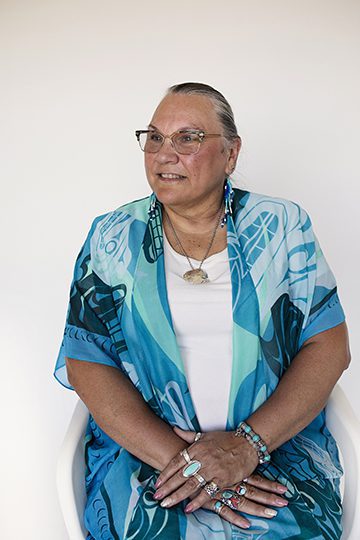
Debra wanted to be a Xyólheméylh Elder because she wanted to make a difference in the lives of children and families. She says it took her a long time to heal herself from trauma and that she wants to share the importance of self-care and balance that the medicine wheel represents with others. “Everyday I’m blessed that the Creator is with me,” says Debra.
Debra is Cree/ Métis on her mother’s side and was born in Edmonton. Her mother was born in Grouard, Alberta in the Treaty Eight Kapawe’No First Nation and was a Residential School Survivor. She didn’t talk about her experience until Debra was an adult. She grew up surrounded by culture but didn’t understand or fully appreciate it until she was older. Her grandparents were Bernard Chalifoux and Marie Cardinal. Grouard has a rich Indigenous history as the site of the signing of Treaty Eight in 1899.
Debra started working in Surrey School District 36 as an Indigenous Youth Care Worker in 1996. “I knew early on that I wanted to make a difference in my community and my family life,” says Debra.
Debra takes great pride in her collaborations with other organizations on Red Dress, MMIWG2S and other awareness initiatives. She also enjoys leading discussions about Truth & Reconciliation while facilitating workshops, creating events, organizing, and mentoring others. In addition to being a community leader, she is also a mother and kookum to her grandson Kingston.
Debra shares a story of her experience with Xyólheméylh that illustrates why she loves being an Elder. A two-year-old girl who was in foster care was headed to New Zealand to be reunited with her family. The grandmother had come from New Zealand to BC to pick up the girl and Debra led a ceremony to honour the occasion and bring closure to the chapter in the little girl’s life. Debra conducted a smudge cleansing ceremony and knew, without a doubt, that the little girl understood the spirituality of the event. “It’s moments like this that are why I do what I do,” says Debra.
“Being an Elder with Xyólheméylh for me is sharing traditional knowledge and guiding youth. It’s about supporting many families and children, especially connecting with their culture and self identity. It’s also about sharing my wisdom and passing down ancestry teachings, such as the medicine wheel and traditional protocols, to the next generations. It is important not just to walk the talk, but to share the love, respect, kindness, honesty, truth, and humble wisdom. The Elders all work together aside side-by-side, but we all have many different teachings and values.”
meet a caregiver: katrina Field
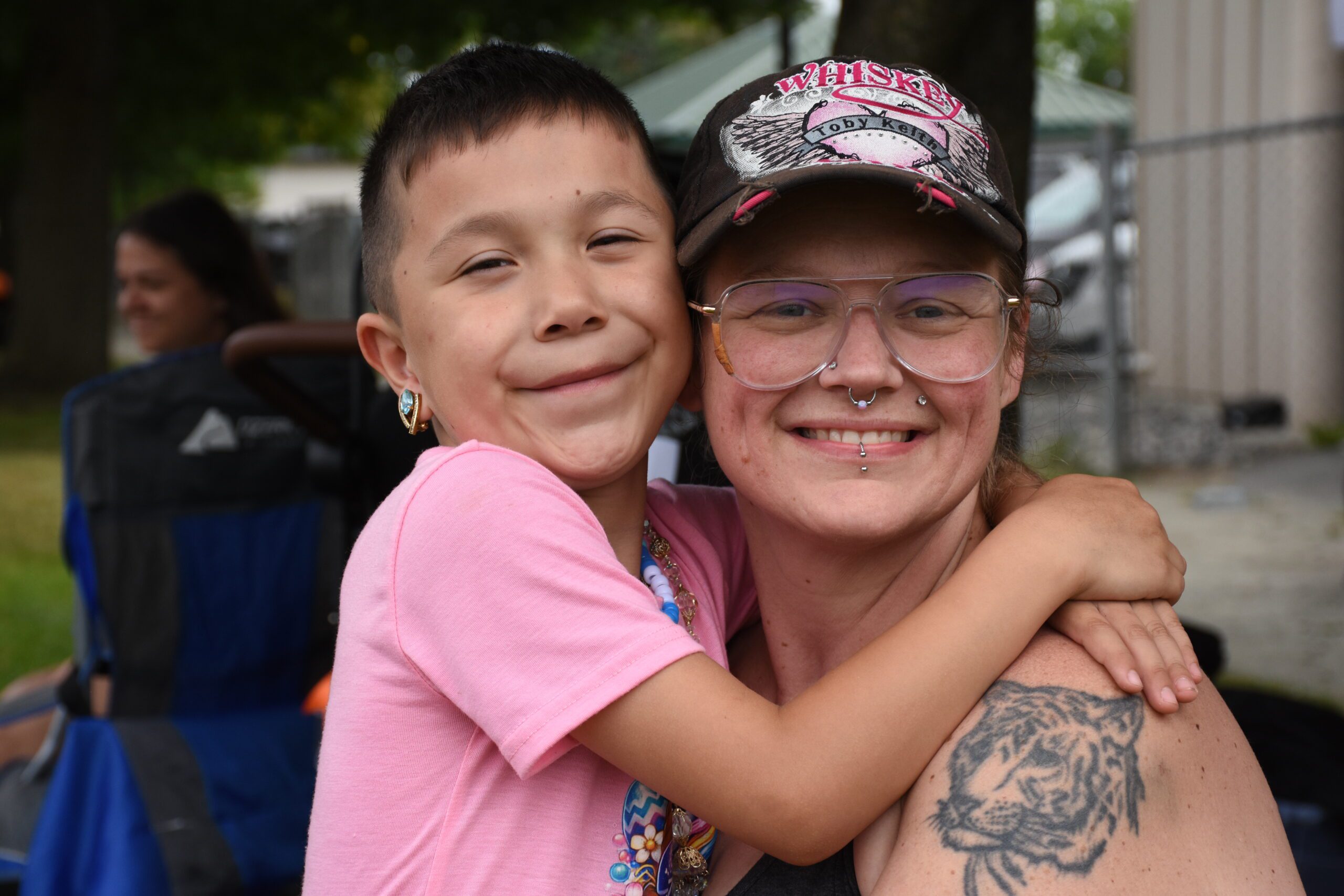
Katrina & Elijah Field
When Katrina Field was a child she watched her paramedic father literally save lives while he was off duty. Whether it was the influence of her father or her own innate nature, she also loves caring for people and making a positive difference in their lives.
Katrina has been a caregiver with Xyóheméylh for over three years. She currently has three foster children, ages 13 months, a three-year-old, a five-year-old, in addition to her adopted son Elijah who is six.
Katrina couldn’t have children of her own and was working in a transition house where she came into contact with a lot of social workers, one of whom was with Xyóheméylh. The social worker, noticing Katrina’s empathy with children, encouraged her to be a caregiver. Katrina was in the process of adopting her son so she waited a few years until he was two and a half before beginning the process. She is a single parent now and has had as many as six kids in her home, most of whom she stays in touch with when they leave.
While she is non-Indigenous, Katrina had an Indigenous mentor years ago who introduced her to teachings and practices such as sweat lodges and gave her a spirit name. Also, her adopted son Elijah belongs to the Stó:lō First Nations and has many questions about his Indigenous heritage and the creator. She feels strongly that Indigenous children should know their cultures.
She says it’s not always easy being a foster parent but when she needs support from Xyóheméylh she reaches out. She also has the support of her mother and friends.
Katrina is passionate about caring for children and says being a caregiver fills her heart. Her family motto is to spread love and kindness. She especially loves seeing how the children grow when they feel loved and safe.
Working with Elders video
We are so fortunate at Xyólheméylh to work with Elders who are involved at every level of the organization. They provide wisdom and teachings to the executive team, staff, children, youth and families. This video features Board member Brooke Metchewais, Elders Sid Douglas and Lou Silver Kaarsmaker, and staff members Justin Williams and Teressa Galis discuss how to work with Elders respectively and effectively. This video was developed as a training tool for staff but others may find it helpful.
visions and voices summer events
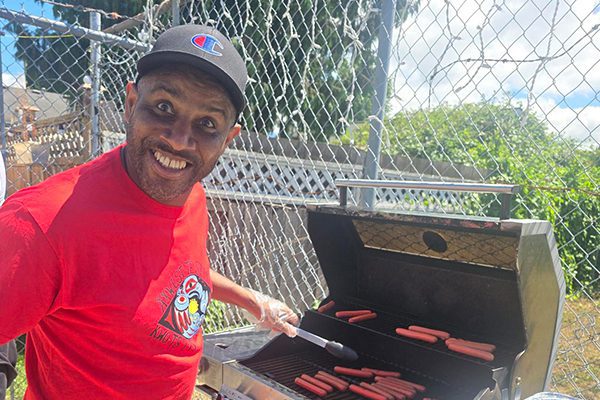
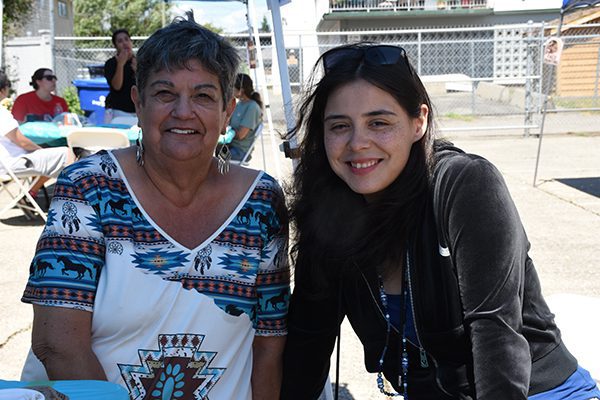

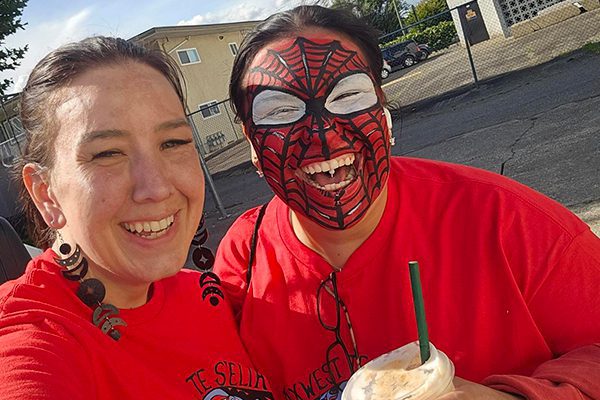

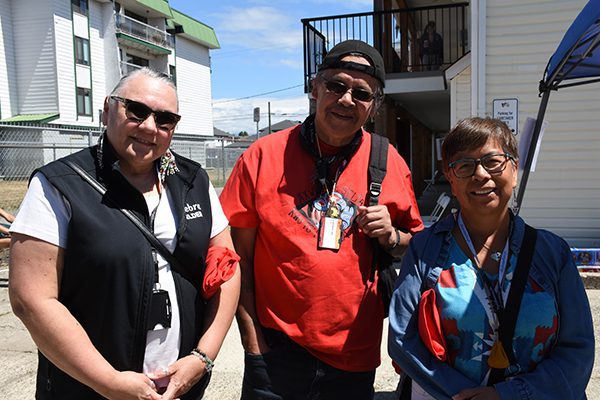
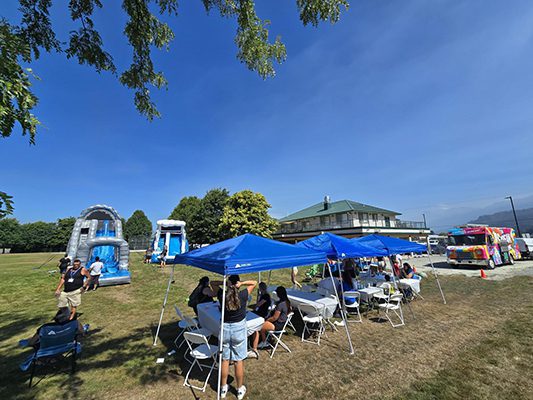

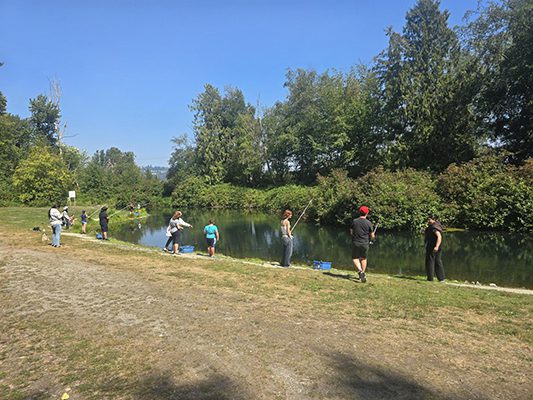
Over 135 people attended the Grand Opening of our new Youth Hub in Chilliwack, located at 9305 Hazel Street. The drop-in space has resources for youth, access to youth mentors, showers, a clothing room, a food pantry, wifi, games, crafts and help with homework. Other Visions and Voices events this summer included bannock making, fishing, our annual Waterpalooza event and several workshops in partnership with Foundry Abbotsford.
caregiver fun day
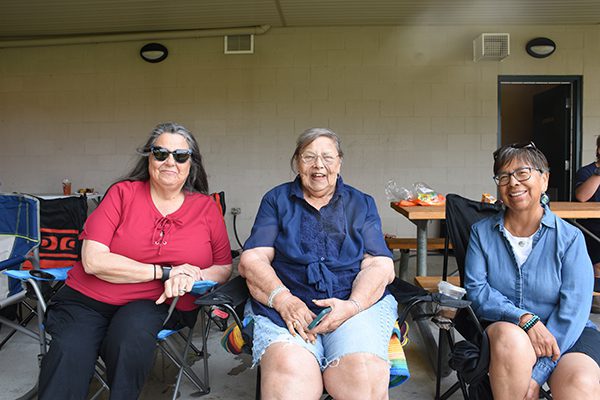
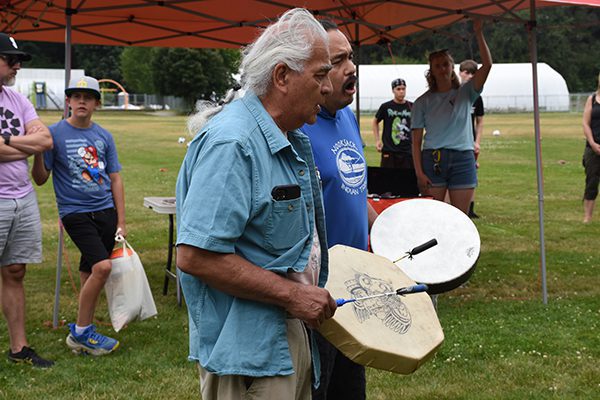
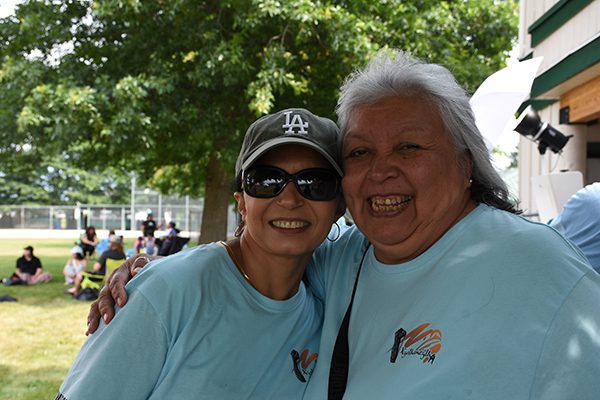
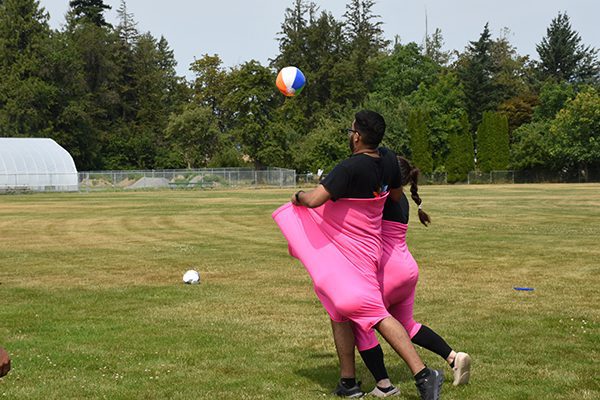


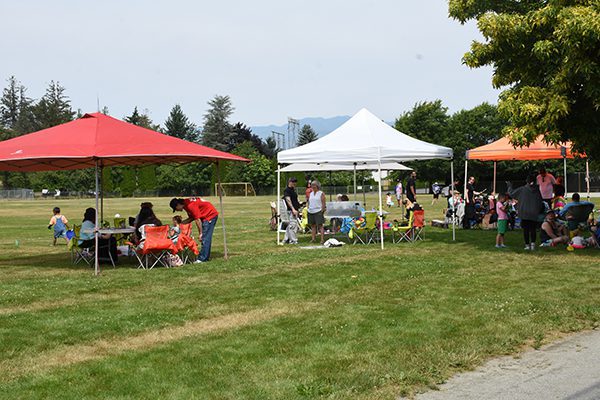
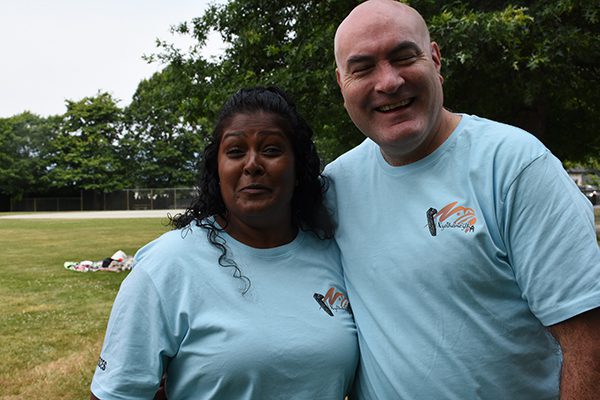
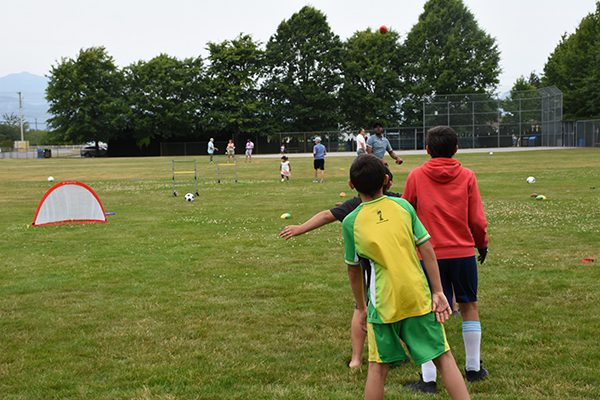
On July 16 we held our annual Caregiver Fun Day at Ch’íyáqtel First Nations Sports Field in Chilliwack. It was good to see everyone and to show our caregivers how much we appreciate them.
upcoming events

upcoming events